


If you’re clearing out a home in Glenside, a self-load dumpster is not automatically the cheaper option. In one recent pricing call, a 20-yard dumpster started at $600 flat, then climbed to roughly $850 once the $125-per-ton disposal fee kicked in, with a two-ton minimum. That total landed higher than a $650 all-in price for full-truckload junk removal. Same cleanout. Different math.
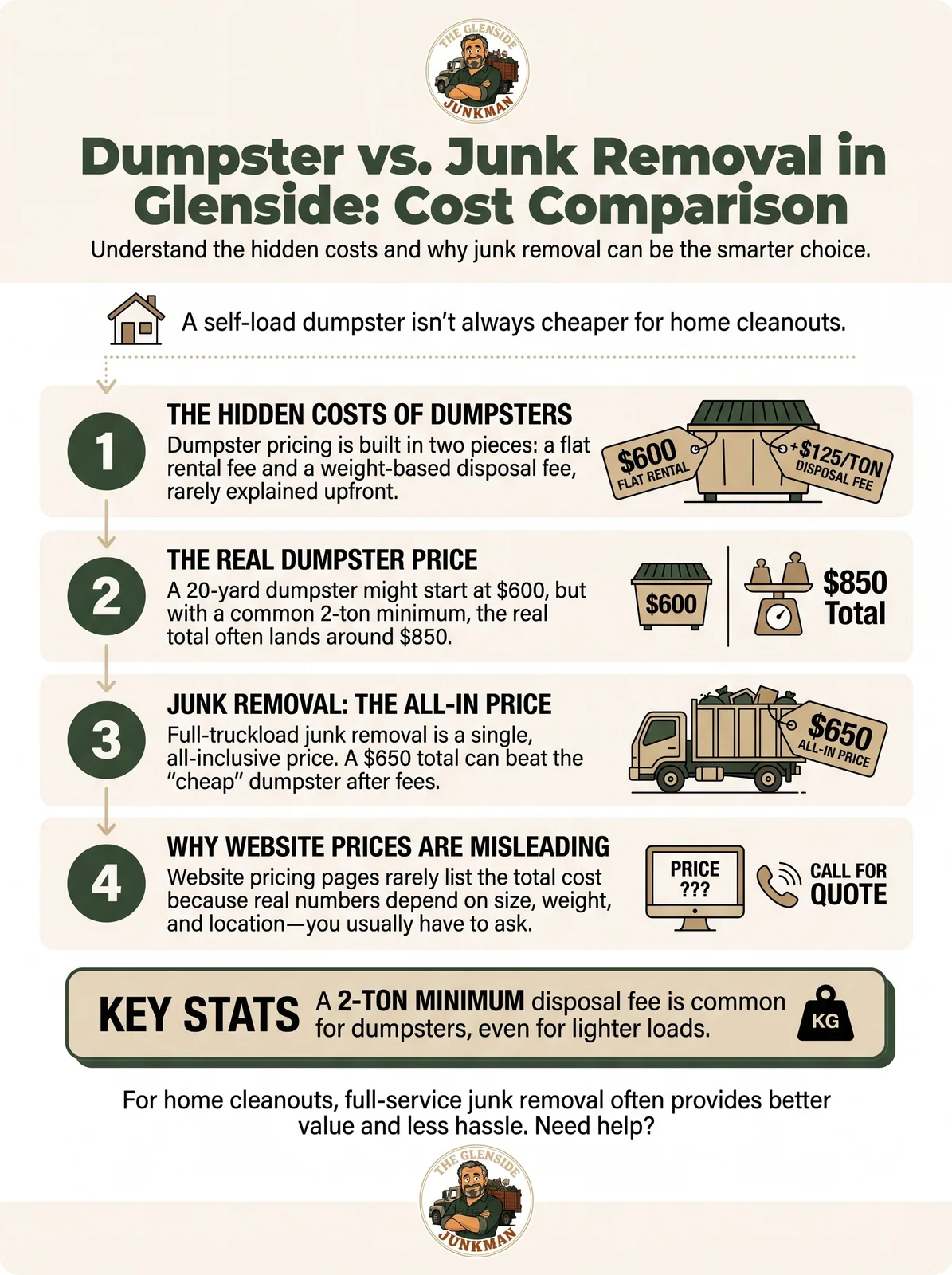
- A dumpster rental is almost always two separate charges — a flat rental fee and a weight-based disposal fee — not one flat number.
- Most providers charge a tonnage minimum, so you pay for at least two tons even if your pile weighs less.
- For a self-load home cleanout, full-truckload junk removal can sometimes beat the “cheap” dumpster once weight fees are added.
- Website pricing pages rarely list a total cost because the real number depends on size, weight, and location — you usually have to ask.
How dumpster rental pricing actually works
Dumpster pricing is built in two pieces, and almost nobody explains this upfront. There’s a flat rental fee for dropping off and picking up the container. Then there’s a disposal fee, charged by weight, for whatever actually gets hauled to the landfill.
I run Junk Removal Glenside, and this exact scenario played out on a call a few weeks ago. A homeowner wanted a 20-yard dumpster for a home cleanout — nothing heavy, just years of accumulated stuff. He’d planned around a $600 number he’d seen mentioned somewhere. The real starting total was $850. His reaction was simple: “Oh, wow… that’s a little bit out of my price range.” That’s not an unusual response. It’s the most common one.
The rental fee vs. the disposal (tonnage) fee
The rental fee covers the container itself — delivery, the days it sits in your driveway, and pickup. In the call above, that fee was $600 for a 20-yard unit. The disposal fee is separate and covers what the landfill or transfer station charges per ton of material. At $125 per ton with a two-ton minimum, that’s another $250 tacked onto the rental before you’ve thrown in a single box.
$600 plus $250 gets you to $850. That’s the starting total — not the ceiling. Fill the dumpster heavier than two tons, and the bill climbs from there.
Why the “minimum tonnage” catches people off guard
A disposal minimum is a floor, not an estimate. You’re billed for at least two tons whether you use one ton or the full two. This is the detail that trips up almost every first-time renter, because it reads like a technicality until you see it on an invoice.
Here’s the part that matters for a home cleanout specifically: old furniture, boxes of linens, and bulky-but-light household items often don’t come close to two tons, even in a full 20-yard container. Plaster, tile, roofing shingles, and old concrete are a different story — those hit the minimum fast, sometimes with room to spare. Know roughly what you’re throwing out before you assume the minimum works in your favor.
Which materials add weight the fastest?
Construction debris, dirt, plaster, tile, and old appliances are dense and add tonnage quickly. Mattresses, couches, cardboard, and clothing take up a lot of space but weigh relatively little — which is exactly why a dumpster that looks “full” after a home cleanout might still land well under the tonnage minimum.
What a 20-yard dumpster holds (and who needs it)
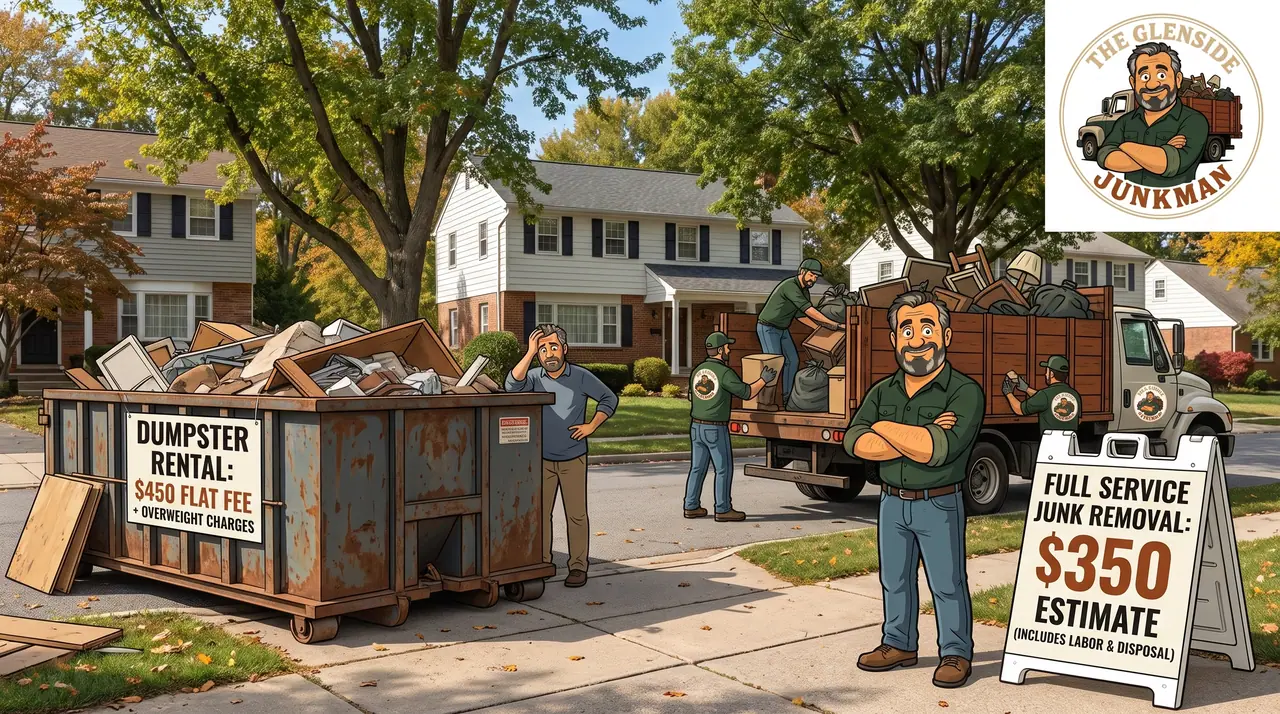
A 20-yard dumpster is the size most people picture when they think “roll-off container.” It’s the go-to size for a single large room, a garage, or a moderate whole-home cleanout — roughly the volume of six to eight pickup-truck loads, depending on how the material is stacked.
For the caller described above, a 20-yard made sense on paper: enough room for furniture, boxes, and general household debris from a home that was being cleared out room by room. If you want the full breakdown of every size we stock and what each one is built for, the dumpster rental page lays out the options side by side.
- Holds roughly 6–8 pickup-truck loads of mixed household material.
- Fits a single-room renovation, a garage clear-out, or a moderate whole-home cleanout.
- Typically stays on-site for several days, giving you time to load at your own pace.
- Best suited for bulky-but-light material rather than dense construction debris, if you’re trying to stay near the tonnage minimum.
Dumpster rental vs. full junk removal: the cost comparison
This is where the math gets interesting, and it’s the whole reason this article exists. On paper, renting a dumpster and doing the labor yourself sounds like the budget option. In practice, once disposal fees are added, it isn’t always true.
| Factor | 20-Yard Dumpster (Self-Load) | Full-Truckload Junk Removal |
|---|---|---|
| Flat fee | $600 rental | Included in one price |
| Disposal / weight fee | $125 per ton, 2-ton minimum ($250+) | Included — no separate tonnage math |
| Starting total | ~$850 upfront | ~$650 all-in |
| Who loads it | You | The crew |
| Timeline | Container sits on-site for days | Done same day, on a scheduled visit |
| Best for | Long projects, spread-out work, flexible schedule | One-time cleanouts where labor is the bigger hassle |
Option 1 — Rent a dumpster and load it yourself
You set the pace. The container sits in the driveway, and you fill it over however many days the rental allows. That flexibility is real, and for some projects it’s worth paying for.
But the labor doesn’t disappear — it just moves to you. And the tonnage fee still applies no matter who does the lifting. For a home cleanout, piling everything up in advance (exactly what the caller planned to do — “as soon as they pull up, we just throw everything in there”) saves time on pickup day, but it doesn’t change the $850 starting number.
Option 2 — Full-truckload junk removal (they load and haul)
A full-truckload price is a single number. No separate tonnage line, no guessing about weight, no second invoice later. The $650 quote from that same call already included removal through disposal — one price, done.
A crew shows up, loads everything — old couches that need proper furniture removal, broken appliances that fall under appliance removal, boxes, debris — and hauls it the same day. You lose some scheduling flexibility, since the crew works on their timeline, not yours spread across a week. That’s the trade-off: less control over timing, in exchange for a flat, predictable number.
A simple way to decide which is cheaper
Don’t start with the rental fee. Start with the weight.
- Estimate roughly how heavy your pile is — mostly light household items, or dense material like tile, plaster, or old appliances?
- If it’s light and spread over several days of work, a dumpster may fit, as long as you compare the full total, not just the rental number.
- If it’s heavy enough to hit (or exceed) the tonnage minimum anyway, and you’d rather skip the loading, full-truckload removal often wins on price and effort.
- Always ask for the all-in number before booking either one — rental plus disposal, or the flat truckload price.
Questions to ask before you book either option
The caller’s biggest frustration was simple: the website didn’t list a total cost. That’s common in this industry, because the real number depends on size, weight, and distance to the disposal site. Asking the right questions upfront closes that gap fast.
Before you book, confirm these details
Want the real total before you commit to a size or a truck? Call Junk Removal Glenside at 267-536-4671 and we’ll walk through both options — self-load dumpster versus full-truckload pickup — so you’re comparing real numbers, not just a rental fee.
Timing and scheduling your Glenside cleanout
Booking ahead matters more than people expect. The caller mentioned wanting service “the week of the 4th… probably on that Monday” — roughly two weeks out from when he called. That’s a reasonable window for either a dumpster drop-off or a scheduled truckload pickup.
Same-week availability sometimes exists, but it’s not guaranteed, especially for a specific date. If you already know your cleanout timeline, lock it in early rather than waiting until the week you need the container or the crew on-site.
What to do next
Price out the whole job before you pick a method. A dumpster rental that looks like $600 on a flyer can land at $850 once disposal is factored in. A truckload price that sounds high at first glance can turn out cheaper once you account for your own labor and the tonnage you’d otherwise pay for anyway.
Not every cleanout fits the same answer. A slow, spread-out renovation project with light debris might still favor a dumpster. A one-time home cleanout you want gone by next week usually favors a flat-rate crew.
Ready to compare an actual total for your Glenside cleanout? Call 267-536-4671 and ask for both numbers side by side — the self-load dumpster total and the full-truckload price — before you book either one.
Frequently asked questions
How much does a 20-yard dumpster cost in Glenside?
Based on a recent quote, a 20-yard dumpster started around $600 for the rental, plus disposal at $125 per ton with a two-ton minimum — bringing the starting total to roughly $850 upfront. The final cost depends on how much the container actually weighs when it’s hauled away.
Is renting a dumpster cheaper than hiring junk removal?
Not always. For a self-load home cleanout, full-truckload junk removal priced around $650 cost less than a 20-yard dumpster at roughly $850 once tonnage fees were included. It depends on how much your pile weighs, whether you want to do the loading, and how much your timeline matters.
Why isn’t the dumpster price listed on the website?
Most providers quote by phone because the real total depends on container size, your location, and the weight you’ll generate — not just a flat rental number. Always ask for the full upfront total, rental plus disposal, before assuming a listed starting price is the whole story.
What is a disposal or tonnage fee, and why is there a minimum?
A disposal fee is the per-ton charge a hauler pays the landfill or transfer station to dump your material, passed along to you as part of the total cost. Providers set a minimum — often two tons — because it costs them roughly the same to haul a half-full container as a full one, so you’re billed for at least that floor regardless of actual weight.
Can I load the dumpster myself to save money?
Yes. Self-loading is standard, and it cuts out labor costs since you’re doing the work instead of a crew. Just remember the tonnage fee still applies no matter who loads it, so the savings are usually smaller than people expect going in.
How far in advance should I book a dumpster or junk removal in Glenside?
Booking about two weeks ahead of a specific date is a safe window, based on typical scheduling patterns. Same-week openings do come up, but they’re not something to count on if your cleanout date is fixed.