
Yes, a junk removal company can haul away your old air conditioner — but there is a catch almost nobody talks about. The refrigerant (Freon, R-22, or R-410A) inside the unit must be legally recovered before any hauler touches it. A general junk crew typically is not certified to do that part. If you are in Glenside and trying to get rid of an AC unit, this article walks you through exactly who does what, in what order, so you do not waste a phone call finding out the hard way.

What you need to know:
- AC removal is two separate jobs: refrigerant recovery and physical haul-away.
- Most junk haulers handle the haul — not the refrigerant extraction.
- Intentionally venting refrigerant is restricted under federal EPA rules.
- Commercial and rooftop units carry more refrigerant and require professional recovery.
- Ask about refrigerant before you book — it is the question that decides everything.
Why “Do You Remove Air Conditioners?” Is Actually Two Questions
When someone calls a junk removal company and asks “do you remove air conditioners?” they are really asking two things at once. The first question is easy: can you physically pick up this unit and take it away? The answer is almost always yes. The second question is the one that stops most calls cold: can you extract the refrigerant out of it first?
Those are different jobs, handled by different people with different certifications. A hauler said “yeah” to removal on a recent call — then hit a wall the moment the caller asked about refrigerant recovery. The caller knew these were separate tasks. The hauler did not. The call ended right there.
Understanding this split is the single most useful thing you can take from this article.
What Refrigerant Is and Why It Cannot Just Be Hauled Away
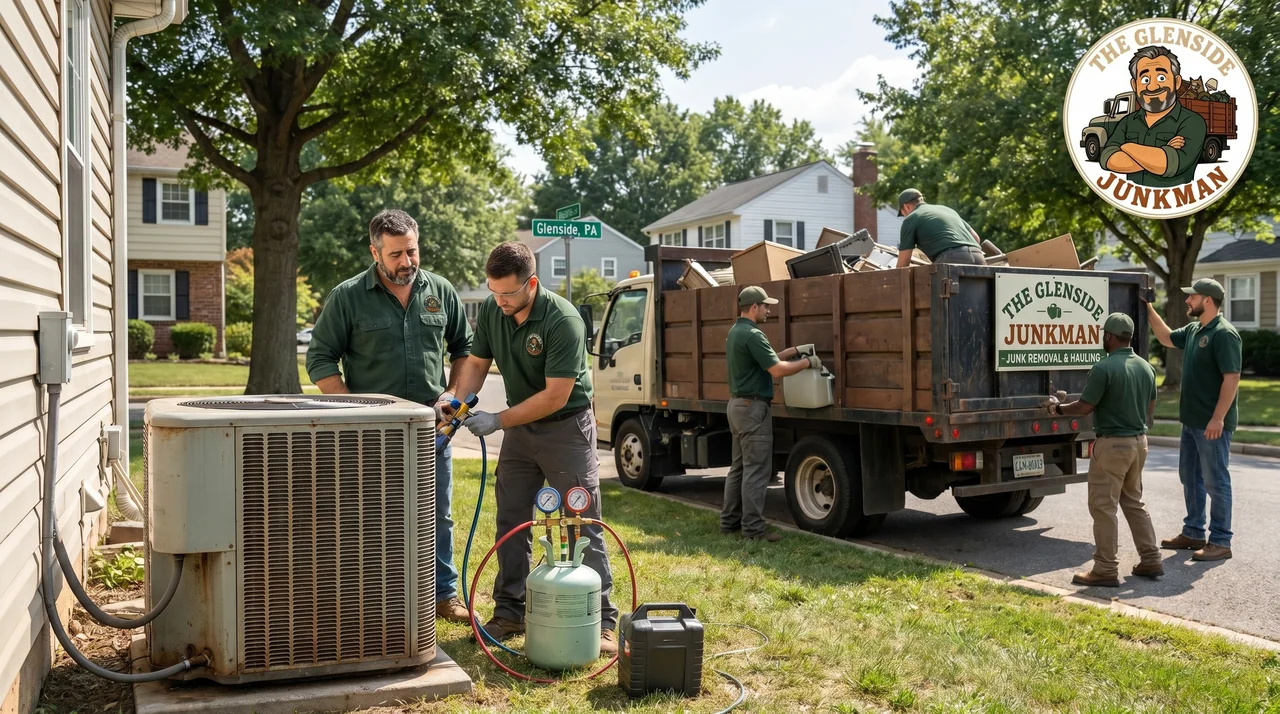
Refrigerant is the pressurized gas or liquid inside an air conditioner that makes the cooling actually happen. Common types include R-22 (older systems, often called Freon) and R-410A (newer systems). These are not neutral substances — they are regulated chemicals, and releasing them into the atmosphere is restricted under EPA Section 608 of the Clean Air Act.
In plain terms: you cannot just haul an AC unit to a scrap yard with the refrigerant still inside. The gas has to be captured first using certified recovery equipment. A technician connects a recovery machine to the unit, pulls the refrigerant out, and stores it in an approved container. Only after that step is the unit safe to transport and dispose of like normal scrap metal.
This is not a technicality. It is a federal requirement, and it is the reason a caller asking “do you extract the refrigerant?” is not being difficult — they are screening for compliance.
Window Units vs. Commercial and Central Systems
Not all AC units are treated the same. Small window units contain a limited refrigerant charge, and the handling requirements for technicians working on them differ from larger systems. Commercial rooftop units, central split systems, and industrial AC equipment contain significantly more refrigerant and generally require full professional recovery before disposal.
The caller who prompted this article specifically asked about commercial air conditioners — the heavier-regulation end of the spectrum. If you are dealing with a rooftop unit or a large commercial system, assume professional refrigerant recovery is required before any hauler gets involved. Confirm specifics with a licensed HVAC technician.
Who Does What: The Division of Labor
Here is the straightforward breakdown of roles:
- EPA-certified HVAC technician: recovers and properly stores the refrigerant. This person needs to be licensed for this work. They use a recovery machine, document the process, and can provide a certificate or tag confirming the refrigerant was removed.
- Junk removal crew: picks up the emptied unit, loads it, and transports it for disposal or recycling. This is the part a general hauler handles well.
- Scrap or recycling facility: processes the metal shell — copper coils, aluminum fins, steel casing — after the hazardous component is gone.
The gap that ends calls is when someone assumes the hauler handles both. Usually they do not.
Questions to Ask Before You Book
Before scheduling anyone, get clear answers to these:
- Has the refrigerant already been recovered from this unit?
- Does your hauler require a recovery certificate before accepting the unit?
- If not, can they connect you with a certified HVAC tech to handle that step first?
- For commercial units — who is coordinating the full job?
Asking these upfront saves you the dead-end call the transcript above describes.
The Right Order for Getting an Old AC Removed in Glenside
Follow this sequence and the process is straightforward:
- Confirm whether refrigerant is still in the unit. If the system has been decommissioned by an HVAC company already, ask for documentation. If it has not, move to step two.
- Hire a certified HVAC technician to recover the refrigerant. Get a written confirmation or recovery tag. This protects you and is required by many disposal facilities.
- Schedule the junk hauler. With the unit emptied and documented, it is now a standard heavy-metal pickup. Book your removal, confirm the price, and get it gone.
This three-step sequence applies whether you are clearing a single window unit or a commercial rooftop system. The commercial job just involves more refrigerant and more coordination upfront.
Cost: Two Separate Line Items
| Step | Who Does It | What Affects the Price |
|---|---|---|
| Refrigerant recovery | EPA-certified HVAC technician | Unit size, refrigerant type, volume, access difficulty |
| Haul-away and disposal | Junk removal company | Unit size and weight, number of units, labor to move it |
Commercial and rooftop units cost more on both sides — more refrigerant to recover and more labor to move the physical unit. For specific pricing, get quotes from an HVAC tech for the recovery step and from your hauler separately for the removal. Do not expect one flat price to cover both unless a company explicitly offers a bundled service and confirms they are certified for recovery.
Where the Unit Goes After the Refrigerant Is Out
Once the refrigerant is recovered, an old AC unit is largely recyclable metal. The copper coils, aluminum fins, and steel housing all have scrap value. Most disposal companies send emptied units to a scrap or metal recycling facility rather than a landfill.
For appliance removal in Glenside, this is the standard path — strip the hazardous components, recycle the rest. It is the clean, legal, and straightforward outcome once the refrigerant step is handled correctly.
Need to haul away an old AC unit in Glenside after the refrigerant has been recovered? Junk Removal Glenside handles the pickup and disposal once the unit is cleared. Call (267) 536-4671 to confirm availability and pricing before you book.
Getting It Handled in the Glenside Area
If you are in Glenside and ready to schedule the haul-away after the refrigerant has been extracted by a certified technician, a local hauler can handle the rest. For furniture removal and large appliances alongside your AC unit, coordinating everything in one pickup is usually the most efficient move. Confirm that the refrigerant step is complete before the truck rolls — that one detail keeps the job compliant and keeps everyone on the same page.
Frequently Asked Questions
Can I just throw my old air conditioner in the trash?
No. Units that still contain refrigerant cannot go in regular household trash. The refrigerant must be recovered by a certified technician before the unit can be disposed of through normal waste or scrap channels. Skipping this step is not just an environmental problem — it is a legal one.
Will a junk removal company remove the Freon for me?
Usually not. Most general junk haulers are not EPA-certified for refrigerant recovery. This is exactly the gap that surfaced in the call described above — the hauler said yes to removal, then could not answer the refrigerant question. Always confirm this before booking. If the hauler cannot recover refrigerant, you need an HVAC technician to handle that step first.
What is the difference between removing a window AC and a commercial unit?
Window units are smaller, contain less refrigerant, and are easier to handle physically. Commercial rooftop and split systems contain significantly more refrigerant, require more labor to disconnect and move, and are subject to stricter handling requirements. The caller in the scenario above was specifically asking about commercial units — the more involved case on both counts.
Do I need proof that the refrigerant was recovered?
For commercial jobs in particular, yes — some haulers and disposal facilities ask for a recovery certificate or tag confirming a certified technician removed the refrigerant. It is worth requesting this documentation from your HVAC technician as a standard part of the job, even if no one asks for it upfront.
Is it illegal to vent refrigerant into the air?
Intentionally releasing most refrigerants into the atmosphere is restricted under EPA Section 608 of the Clean Air Act. This is the core reason the refrigerant recovery step exists. It is not optional, and it applies to both residential and commercial equipment.
Can the AC unit be recycled once it is empty?
Yes. Once the refrigerant is removed, an air conditioner is primarily recyclable metal — copper, aluminum, and steel. Most responsible disposal companies route emptied units to scrap recycling facilities. If you are also clearing other items, pairing the AC haul with a dumpster rental for the rest of the debris can make the whole project cleaner and more efficient.
The bottom line: air conditioner removal in Glenside is a two-step job. Get the refrigerant handled by a certified technician, then call your hauler for the rest. That sequence is all you need to avoid the dead-end call. For the haul-away step, reach out to (267) 536-4671 once you have the recovery documentation in hand.