


When a house is still being emptied by family members, a junk removal quote works in two stages: a rough estimate from photos or video first, and often an on-site visit before the actual job for a full house cleanout. The number can shift slightly as more items leave, but you’re told before any work starts, and there’s no obligation to book. This is exactly how estate and after-a-loss cleanouts in Glenside and nearby Wyndmoor typically get priced.
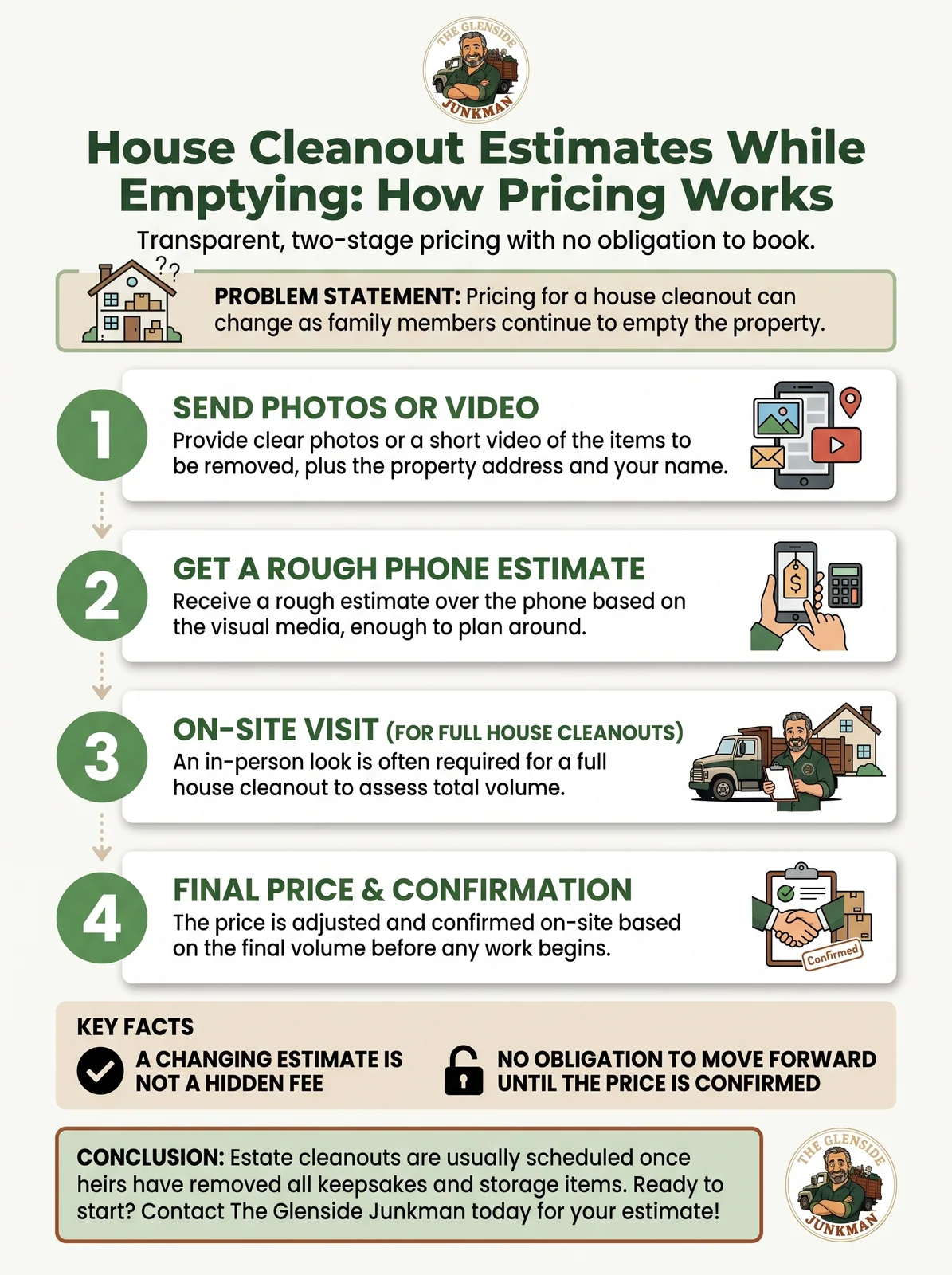
- Send photos or video plus the property address and your name to get a rough phone estimate.
- For a full house cleanout, an in-person look before the job is common, since photos rarely capture total volume.
- If the final pile is smaller than the photos showed, the price is adjusted and confirmed before work begins.
- A changing estimate is not a hidden fee — it’s communicated upfront, with no obligation to move forward.
- Estate cleanouts are usually scheduled once heirs have removed keepsakes and storage items.
How the Estimate Process Works
The process is simple and starts before anyone shows up at the property. You send clear photos or a short video of what needs to be removed, along with the address and your name attached to the request. From that, you get a rough estimate over the phone — enough to plan around, even if it’s not the final number yet.
For a full house cleanout, that photo estimate is often just the starting point. Because whole-house jobs involve rooms, closets, basements, attics, and garages that photos can’t fully capture, an on-site visit before the job is common. This isn’t extra red tape — it’s how the estimate ends up matching the real workload instead of guessing at it.
Once the volume is confirmed, either from photos or an in-person look, the price is set and communicated clearly before the crew starts loading anything. If something changes along the way, you hear about it first.
Why the Pile You Photograph Isn’t the Pile We Haul
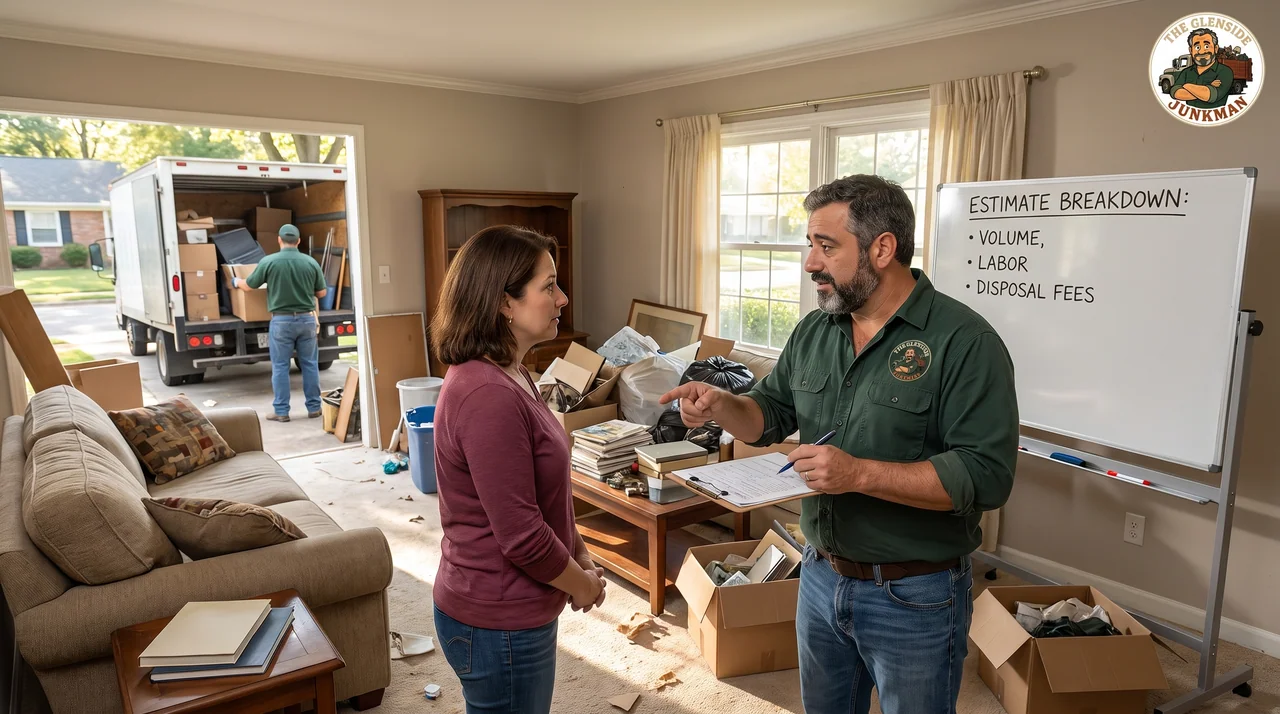
Here’s the part most junk removal articles skip entirely: in an estate cleanout, the house you photograph today is not the house that gets cleared next week. Adult children sorting through a parent’s home are usually still pulling out keepsakes, boxing up items for storage, and deciding what to keep right up until the day of the job.
That means a photo taken this week might show furniture, boxes, and belongings that won’t even be there anymore by the time the crew arrives. The realistic way to think about it: the final job is often the photographed pile minus whatever percentage of belongings the family still plans to remove. A rough estimate accounts for that gap, which is exactly why it’s called rough — it’s a planning number, not a locked invoice.
This is different from a garage cleanout or a single piece of furniture removal job, where what you see is basically what gets hauled. Estate cleanouts are a moving target until the family finishes their part of the process.
How to Describe a Still-Changing House Cleanout
When you reach out for a quote, it helps to explain the situation in plain terms rather than assuming the photos speak for themselves. A few things worth mentioning:
- What’s already been removed by family or moved into storage.
- Roughly how much more will be taken before the cleanout day — a little, about half, or almost nothing.
- Which rooms are fully done versus still active with sorting.
- Whether any large items (appliances, furniture, a shed’s worth of tools) are confirmed to stay or go.
Something as simple as “it’ll be this room’s photos, minus about 10 percent once we finish going through the closet” gives a hauler enough context to adjust the rough number realistically, instead of quoting strictly off a snapshot that’s already outdated.
Photo Quote vs. On-Site Estimate: When Each One Is Used
Both methods have a place, and which one applies usually comes down to the size and complexity of the job. Here’s how they typically compare for a house cleanout:
| Factor | Photo/Video Estimate | On-Site Estimate |
|---|---|---|
| Best for | Single rooms, furniture pickups, smaller defined loads | Whole-house or estate cleanouts with multiple rooms |
| Speed | Rough number over the phone, same call | Scheduled visit before the job is booked |
| Accuracy | Approximate — based on what’s visible in the photos | More precise — accounts for hidden volume in basements, attics, closets |
| Good fit for | Clearly defined jobs, like appliance or furniture removal | Homes where contents are still changing or spread across many rooms |
A quick appliance pickup or a single-room clearout usually doesn’t need a home visit — photos are enough for an appliance removal or furniture haul. A full house, especially one still being sorted through by family, is a different story, and that’s where an in-person look before the job makes the estimate far more reliable.
What to Send for a Photo Estimate
If you want to start with a rough number over the phone, a few basics make the estimate faster and more accurate:
- Clear photos or a short video walking through each room or space that needs to be cleared.
- The property address, so the estimate can be tied to the actual job and location.
- Your name and contact information, especially if you’re coordinating the cleanout for someone else.
- A quick note on what’s staying versus what’s leaving, if the house is still being emptied.
What “The Estimate Might Change” Actually Means
A quote that can shift sometimes worries people — it sounds like a setup for a surprise charge once the truck shows up. That’s not how this works. If the volume ends up different from what the photos showed, the change is flagged before the job starts, not after the crew has already loaded half the truck.
There’s also no obligation attached to that updated number. If the adjusted price doesn’t work for you, you’re not locked into anything. The whole point of flagging it early is so you can make the call with full information, not get surprised at the driveway.
This is a meaningful difference from a bait-and-switch tactic. A flexible estimate based on real, communicated volume changes is just an honest reflection of a house that’s still in motion — not a pricing trick.
Estate and After-a-Loss Cleanouts: What Makes Them Different
Clearing out a home after a death carries a different weight than a typical garage cleanup. Adult children are often sorting through decades of belongings, deciding what to keep, what goes into storage, what gets donated, and what simply needs to go. That sorting process takes time, and it’s usually still happening right up until the cleanout is scheduled.
It’s also common for a third party — a property manager, real estate agent, or family coordinator — to arrange the cleanout on behalf of the family, rather than the homeowner calling directly. That’s a normal part of how estate cleanouts get organized, especially when family members live out of the area or are managing the process alongside other estate matters.
Timing Tip: Book the Cleanout Once the Keeping Is Done
The best way to get an estimate that closely matches the final job is to time the cleanout for after the family has finished pulling out keepsakes and storage items. You can still get an early rough estimate now to plan budget and scheduling, then confirm the final number closer to the actual date once sorting is complete.
This approach avoids the back-and-forth of repeatedly re-quoting a shrinking pile, and it gives the hauler a much more accurate picture of what’s really left when the crew arrives.
What Typically Gets Left Behind in a House Cleanout
After the family has taken what they want to keep or store, what remains is usually the category best described as everything left over that nobody wants. That commonly includes:
- Furniture that isn’t being kept or passed down.
- Mattresses, box springs, and bed frames.
- Older appliances left in kitchens, basements, or garages.
- General household clutter — dishware, linens, small furnishings.
- Leftover items in garages, basements, and attics that built up over years.
Some items may need special handling depending on their condition or type — it’s worth mentioning anything unusual (large built-ins, hazardous materials, or bulky equipment) when you reach out, so it can be accounted for in the estimate.
Serving Glenside, Wyndmoor and Nearby Neighborhoods
House and estate cleanouts like this are handled locally throughout Glenside and neighboring areas like Wyndmoor, where homes still being sorted through by family are a routine part of the work. If you’re coordinating a cleanout — whether for your own family or on behalf of a client — you can start with the same process: send photos with the address and your name attached for a rough estimate, and go from there.
Coordinating an estate or house cleanout in Glenside or Wyndmoor? Send photos with your address and name for a rough estimate, or call 267-536-4671 to talk through the details before scheduling anything. For general pricing and service details, start at Junk Removal Glenside.
Frequently Asked Questions
Can I get a junk removal quote from photos instead of a home visit?
Yes. Sending photos or video along with the address and your name gives you a rough estimate over the phone. For a full house cleanout, an on-site visit before the job may still be needed since photos often can’t capture the full volume.
What if the estimate changes after I’ve sent photos?
Any change is communicated before the job begins, not after work has started. There’s no obligation to proceed if the updated number doesn’t work for you.
How do I get a quote if we’re still removing our own belongings from the house?
Describe roughly what percentage of the contents will remain versus what’s leaving, or wait until keepsakes and storage items are out. An on-site estimate closer to the actual cleanout date can also help match the price to the real workload.
Do you do cleanouts for a home after someone has passed away?
Yes. Estate and after-a-loss house cleanouts are a regular part of the work, and they’re often arranged by adult children or a coordinator acting on the family’s behalf rather than the homeowner directly.
What information do I need to send to get an estimate?
Clear photos or video of the areas to be cleared, the property address, and your name so the estimate can be tied to the correct job.
Is there any obligation after getting an estimate?
No. Getting a rough estimate, whether from photos or an on-site visit, doesn’t obligate you to book the job.
What to Do Next
If you’re managing a house cleanout where family is still sorting through belongings, start with a rough estimate now and refine it as the sorting wraps up. Send clear photos, note what’s staying and what’s going, and mention if it’s a full house so an on-site look can be arranged if needed. If part of the job is a single dumpster-style load rather than a full haul-away, it’s also worth asking about a dumpster rental option for the leftover debris. Reach out with the details whenever you’re ready to move forward.