
If you searched for scrap metal pickup expecting a free haul-away or a check for your metal, here’s the honest answer: small, clean, high-value scrap sometimes pays. Large industrial items like forklifts or a cutting machine almost never do. The labor, equipment, and transport needed to move heavy machinery usually cost more than the scrap is worth, so you pay a removal company to take it away, not the other way around.
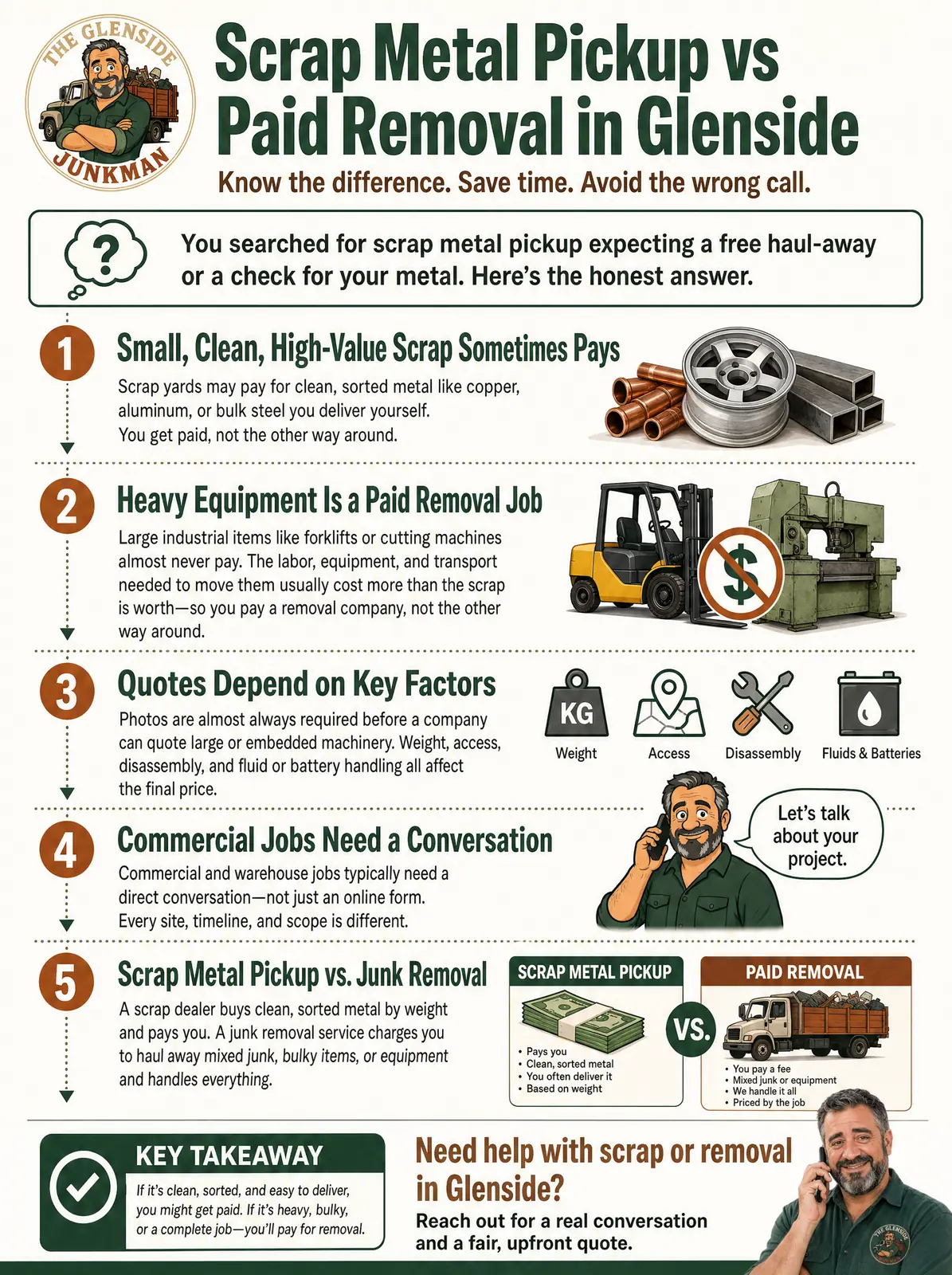
- Scrap yards may pay for clean, sorted metal like copper, aluminum, or bulk steel you deliver yourself.
- Heavy equipment like forklifts and industrial machines is priced as a paid removal job, not a scrap purchase.
- Photos are almost always required before a company can quote large or embedded machinery.
- Weight, access, disassembly, and fluid or battery handling all affect the final price.
- Commercial and warehouse jobs typically need a direct conversation, not just an online form.
Scrap Metal Pickup vs. Junk Removal: What’s the Difference
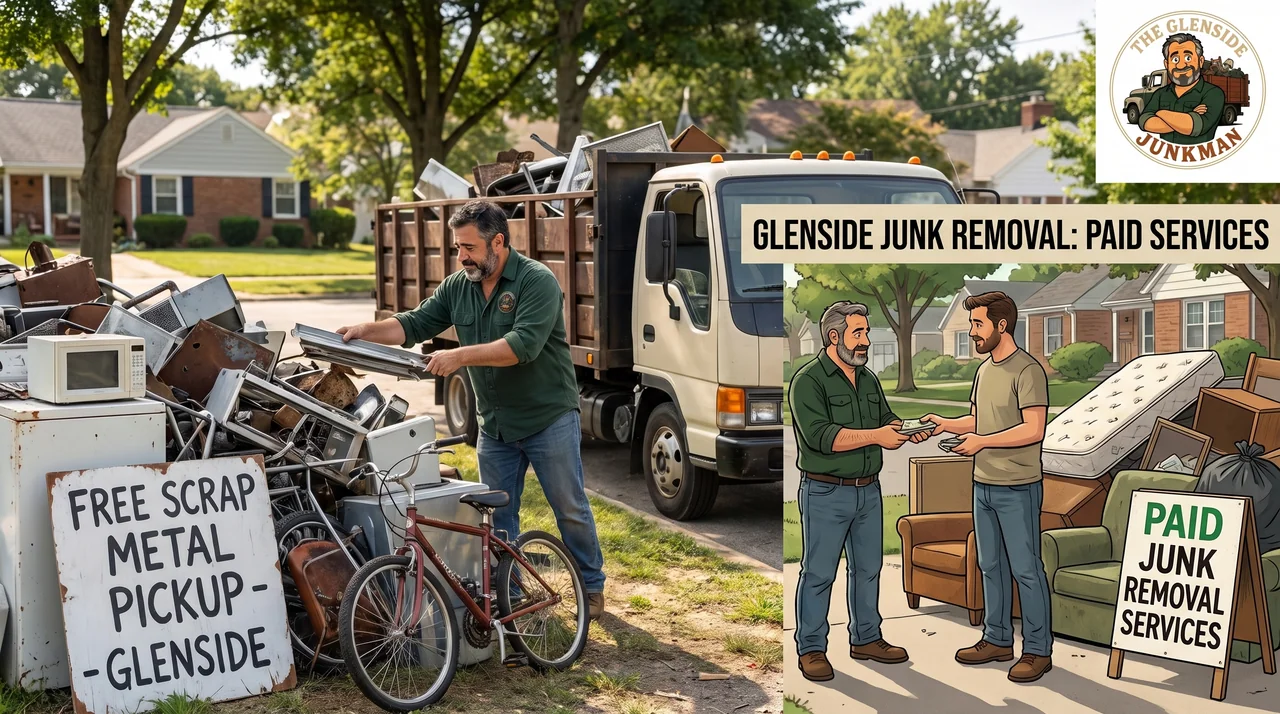
These are two different businesses that get confused constantly. A scrap dealer buys metal by weight and pays you, but only for clean, sorted, high-value loads you often have to deliver yourself. A junk removal service does the opposite: it charges you a fee to haul away mixed junk, bulky items, or equipment, then handles sorting, transport, and disposal on your behalf.
That’s exactly the mix-up that comes up on calls every week. Someone searches for scrap metal pickup, but what they actually need is a company that will send a truck, a crew, and the right equipment to remove something heavy from their property. As one Glenside crew put it plainly: we pick up all kinds of junk, but we charge to remove it. That single sentence explains almost every scrap metal question people have.
When You Get Paid for Scrap Metal
You can realistically get paid for scrap when the metal is clean, sorted by type, and delivered in decent volume. Copper wiring, aluminum siding, and clean steel are the classic examples. Payout depends on current market prices for that metal, how it’s sorted, and whether you or the yard handles transport [verify current local scrap rates]. Small, mixed, or contaminated loads rarely earn much, if anything.
When You Pay to Have It Removed
The math flips once an item is heavy, awkward to move, or built into a space. A forklift with a dead battery, a bolted-down industrial machine, or a mixed-material appliance all cost more in labor and equipment than their scrap value returns. That’s the situation with two old forklifts and a large lace cutting machine — textbook examples of jobs where you pay for removal, not the other way around.
Removing Heavy Equipment: Forklifts, Industrial Machines, and More
Removing forklifts, cutting machines, or similar equipment is nothing like a garage cleanout. These are multi-hundred or multi-thousand-pound machines that require planning before a truck ever shows up. Weight, dimensions, and how the item sits in the building all shape the job.
Why Forklifts and Industrial Machines Aren’t Simple “Scrap”
A forklift isn’t one material — it’s a steel frame, hydraulic lines, a battery or fuel system, motors, and wiring all combined. An industrial cutting machine adds motors, blades, and sometimes electrical control panels. Before any of it can be scrapped responsibly, fluids may need draining, batteries disconnecting, and components separating [verify local disposal requirements for fluids and batteries]. None of that happens with a couch or a mattress, which is why these jobs are quoted differently from typical residential items.
Access and Loading Challenges
Getting a forklift out of a warehouse aisle, or freeing a cutting machine that’s bolted to a concrete floor, takes more than manpower. Crews often need dollies, ramps, or lifting equipment, plus enough clearance through doorways or a loading dock. Tight access, stairs, or long carry distances all add time and cost, which is part of why access is one of the first things assessed for a job like this.
Why Companies Ask for Photos Before Quoting
Photos exist so a company can size up a job without guessing. Weight, dimensions, how the item is positioned, and what’s in the way between the item and the truck all shape the price. That’s why, on jobs involving forklifts or industrial machinery, sending photos is a standard first step rather than an extra hurdle.
What to Include in Your Photos
- Full shots of each item from multiple angles, including any model or weight labels.
- The surrounding area and the path the item would need to travel to get outside.
- Whether the item is bolted down, embedded, or freestanding.
- Any visible fluid leaks, missing parts, or battery compartments.
- A wide shot showing doorway width, stairs, or dock access if relevant.
Even with clear photos, some jobs still need a phone conversation to nail down logistics and pricing — which is normal for anything this size, and often faster than trying to sort it all out through a form.
How Much Does It Cost to Remove Heavy Machinery?
There’s no flat rate for forklifts or industrial machines, and any company that quotes one sight unseen is guessing. Pricing depends on weight, number of items, how hard the equipment is to access, and whether it needs to be partially disassembled first. That’s exactly why no price gets quoted on a first call about two forklifts and a cutting machine — the details have to be reviewed before a number makes sense.
What Drives the Price Up or Down
| Factor | Effect on Price |
|---|---|
| Item weight | Heavier machines need more labor and lifting equipment |
| Number of items | Two forklifts cost more than one, but may be priced together |
| Access difficulty | Tight doorways, stairs, or long carries raise cost |
| Disassembly required | Bolted-down or embedded equipment adds labor time |
| Fluids and batteries | Draining and safe handling add time and disposal steps |
| Scrap value recovered | May slightly offset the removal fee [verify] |
Commercial and Industrial Junk Removal in Glenside
Businesses, warehouses, and manufacturers deal with a different kind of clutter than households. Old forklifts, retired machinery, broken shelving units, and outdated equipment pile up in ways a homeowner never sees. A company handling commercial work in Glenside typically covers everything from a single piece of heavy equipment to a full warehouse cleanout.
These jobs often overlap with other services too. A property clearing out old machinery might also need furniture removal for an office area, or appliance removal for a breakroom being cleared out. For larger commercial cleanouts with ongoing debris, a dumpster rental can make more sense than scheduling multiple pickup trips.
How to Book a Heavy Equipment Removal
Booking a job like this is straightforward once you know what to prepare. Start by taking clear photos of the equipment and its surroundings, then contact a company that specifically handles commercial and heavy item removal. Be ready to discuss quantity, access, and any special conditions like bolted equipment or leaking fluids.
Junk Removal Glenside handles this type of heavy equipment removal, including forklifts, industrial machines, and commercial cleanouts. Send photos and details of what you need removed, and the team can walk you through pricing and logistics over the phone at (267) 536-4671.
Got a forklift, industrial machine, or a warehouse full of old equipment to clear out? Send photos and get a straight answer on what it takes to remove it — call (267) 536-4671.
Frequently Asked Questions
Can I get paid for scrap metal instead of paying to remove it?
Sometimes — clean, sorted, high-value metal delivered to a scrap yard can earn you money. But large embedded items like forklifts or industrial machines usually cost more in labor to remove than the scrap is worth, so you typically pay for removal instead.
Do junk removal companies charge to take scrap metal?
Yes, most do. The fee covers labor, transport, and proper disposal or recycling, not a purchase of the metal itself. That’s the core reality behind the phrase “we pick up all kinds of junk, but we charge to remove it.”
Can you remove a forklift or industrial machine?
Yes, heavy equipment removal is a standard commercial service, but it requires an assessment of weight, access, and whether disassembly is needed before a price is set.
Why do I need to send photos before getting a price?
Photos let a company estimate size, weight, access difficulty, and the equipment needed to move the item safely. Large machinery can’t be quoted blindly over the phone, which is why photos are part of the standard intake process.
How is heavy machinery disposed of after removal?
Metal components are often recycled through scrap facilities, while fluids, batteries, and any hazardous parts are handled separately according to local disposal rules [verify local regulations].
How much does it cost to remove two forklifts and an industrial machine?
There’s no flat rate for a job like this. Pricing depends on weight, quantity, and access, which is why an accurate quote comes only after photos and a direct conversation about the job.