


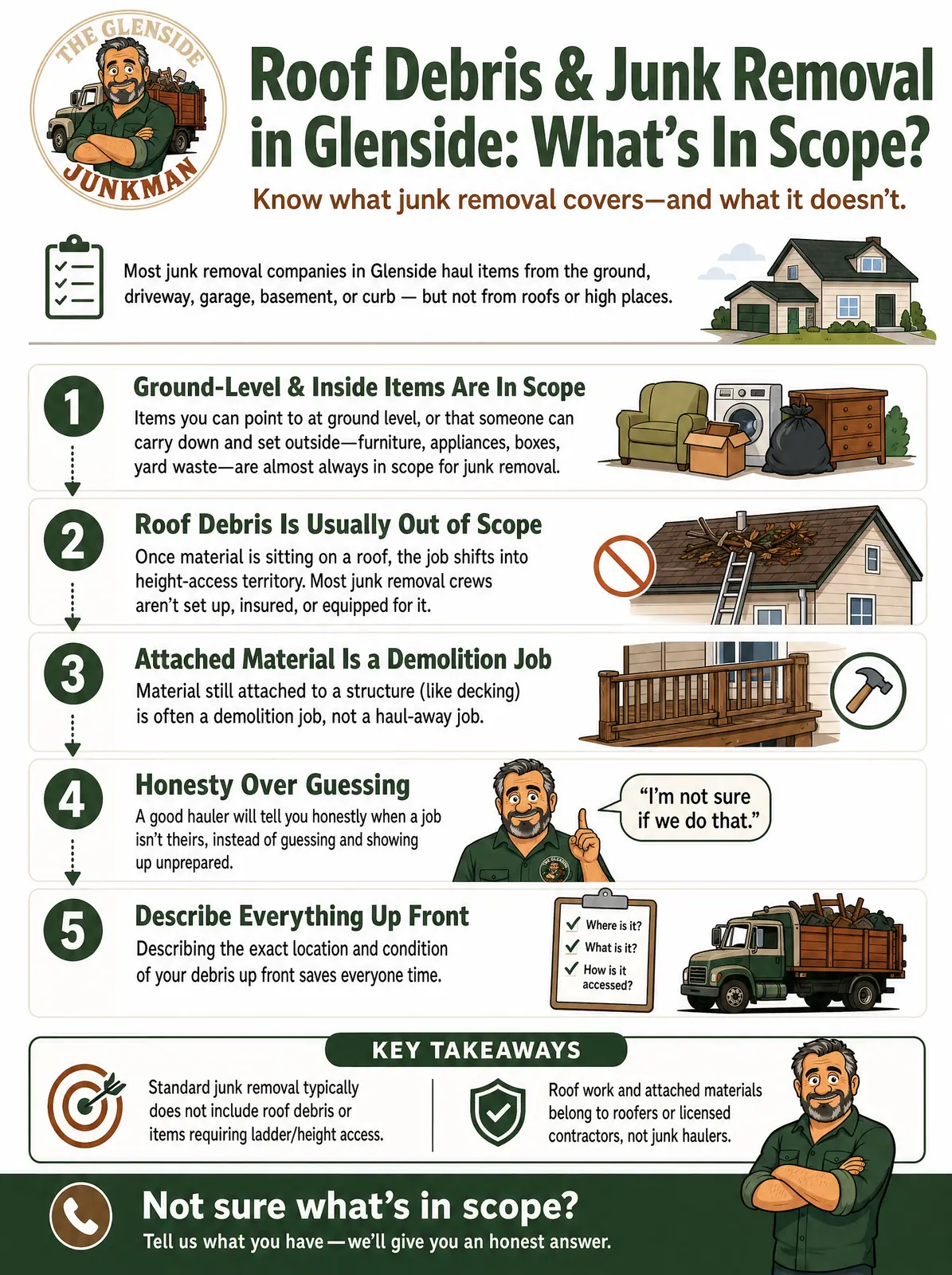
Most junk removal companies in Glenside haul items from the ground, driveway, garage, basement, or curb — but debris sitting ON a roof, or anything that needs a ladder to reach, is often outside a standard hauler’s scope. This exact question came up on a real call, when a homeowner asked about removing “some things on my roof” and the operator gave an honest answer: “I’m not sure if we do that.” That single moment says a lot about how junk removal actually works in Glenside.
Here’s what you need to know before you pick up the phone:
- Ground-level and inside-home items are almost always in scope for junk removal.
- Items still on a roof, or requiring height/ladder access, usually fall to a roofer or licensed contractor.
- Material still attached to a structure (like decking) is often a demolition job, not a haul-away job.
- A good hauler will tell you honestly when a job isn’t theirs, instead of guessing and showing up unprepared.
- Describing the exact location and condition of your debris up front saves everyone time.
Does junk removal include roof debris?
Generally, no. Standard junk removal covers items you can point to at ground level, or that someone can carry down and set outside — furniture, appliances, boxes, yard waste. Once material is sitting on a roof, the job shifts into height-access territory, which most junk removal crews aren’t set up, insured, or equipped for.
This is precisely the scenario from the call: a homeowner wanted material taken “off the roof.” The operator confirmed it — “You want to take it off the roof, you mean?” — and rather than quote a price on the spot, said he’d check and call back. That’s the correct move when a job sits outside normal scope.
Why “is this something you do?” is the right question to ask first
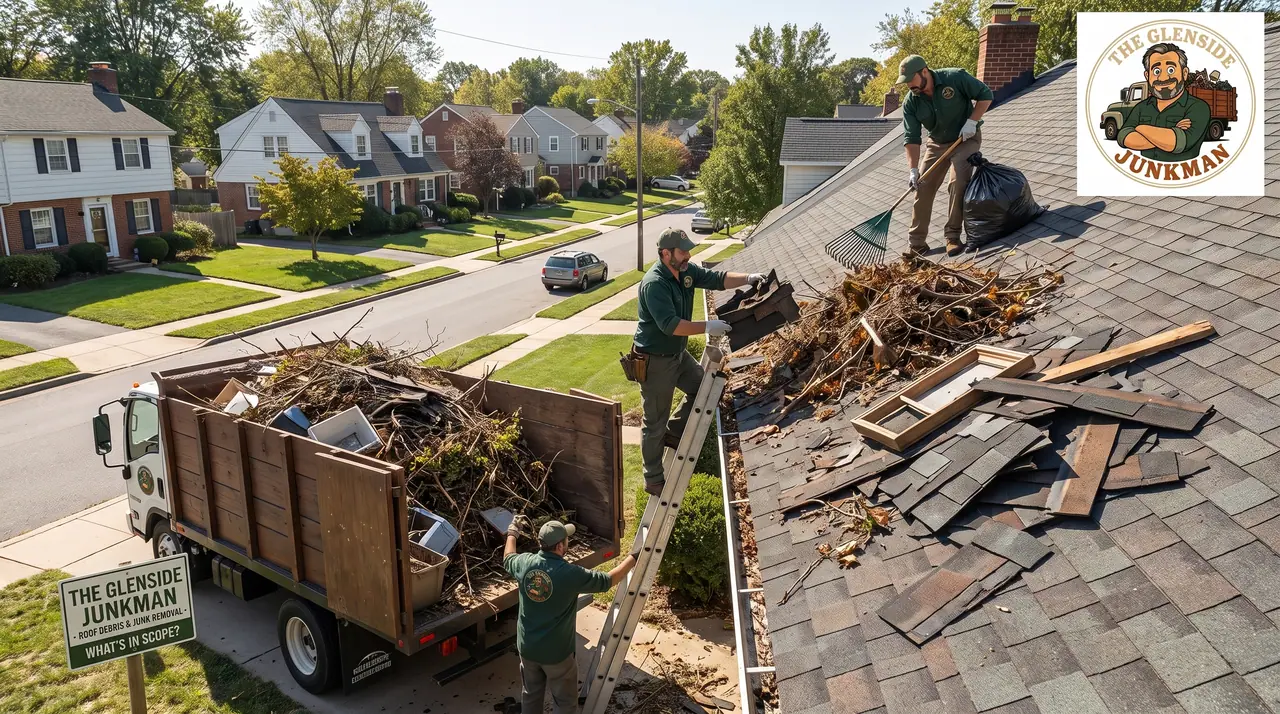
Scope isn’t identical across every company. Some haulers will grab a few loose shingles or detached panels already on the ground; others stick strictly to furniture, appliances, and bagged debris. The smartest approach is to describe the job and its exact location before you book anything.
Notice how the operator handled it: “Can I find out and, um, I could try to call you back… I’ll call you back if it’s something we do, okay?” That’s honesty, not avoidance. A hauler who checks before committing is more trustworthy than one who quotes a price over the phone without ever seeing the job. No price, size tier, or timeline should be quoted until the scope is confirmed — and that’s exactly what happened on this call.
What junk removal typically does take
Once debris is at ground level and detached from any structure, it’s usually straightforward. Standard junk removal jobs in Glenside typically include:
- Old couches, chairs, tables, and other furniture removal from inside the home or curb
- Refrigerators, washers, dryers, and other units through appliance removal
- Electronics, mattresses, and boxed-up belongings from garage or basement cleanouts
- Bagged or piled yard waste already sitting at ground level
- Construction debris that’s been detached and stacked, ready to load
Notice the common thread: everything on that list is either already loose or easy to bring down without special equipment. That’s what separates a normal haul from a specialty job.
What’s usually out of scope (and who handles it instead)
The call that inspired this article surfaced exactly the kind of gray area that trips people up. Here’s how it typically breaks down.
Anything still on a roof
Material sitting on a roof — whether it’s old decking, storm debris, or leftover roofing material — is usually a roofer’s job or a licensed contractor’s job, not a general hauler’s. Getting up there safely requires ladders, harnesses, and insurance coverage specific to height work. A fall risk and potential roof damage make this a liability issue most junk removal crews simply aren’t set up to take on.
Deck material still attached to a structure
The caller described the material as something like “deck paddling,” which likely means deck padding or decking material still connected to a structure (worth confirming exact wording with the homeowner). If that material is still fastened down, it typically needs to be detached first — that’s a demolition or handyman job. Once it’s pulled off and sitting on the ground, a hauler can usually take it as ordinary construction debris. If you’re clearing out a larger project with detached material piling up, a dumpster rental can also be a practical option while the demolition work is happening.
Hazardous materials and specialty items
Paint, chemicals, asbestos, and similar hazardous materials fall outside standard junk removal almost everywhere, not just in Glenside. These require specialized handling and disposal, so don’t expect a general hauler to take them — ask directly if you’re unsure.
Figuring out which type of job you actually have
Before you call anyone, run through three quick questions. They’ll tell you whether you’re dealing with a junk removal job, a roofer’s job, or a demolition job.
- Where is the item? On the ground or already brought down — likely junk removal. Up high or on the roof — likely a roofer or contractor.
- Is it loose or attached? Detached and sitting free — a hauler can take it. Still fastened to a structure — it needs to be removed first, which is demolition or handyman work.
- Is it hazardous? If it’s paint, chemicals, or similar material, it’s a specialty disposal job regardless of location.
Running through these three questions would have made the call in question much shorter — the homeowner wasn’t sure if the material was even in scope, and neither was the operator, until it was checked.
| Situation | Who Typically Handles It |
|---|---|
| Old furniture in the garage | Junk removal company |
| Detached decking stacked on the ground | Junk removal company |
| Decking still fastened to a structure | Demolition or handyman, then junk removal |
| Debris sitting on a rooftop | Roofer or insured contractor |
| Paint, chemicals, asbestos | Hazardous waste specialist |
What to tell the company when you call
Skip the vague description. Instead, give the hauler three pieces of information right away: where the item sits (ground, garage, roof), whether it’s loose or attached, and what it’s made of. If you can, send a photo — it removes the guesswork entirely and lets the company confirm scope in minutes instead of scheduling a callback.
This is the exact gap in the original call. The homeowner wasn’t sure how to describe the material, and the operator had to ask follow-up questions just to understand the request. A clear description up front means you get a straight yes or no faster.
Getting a straight answer fast in Glenside
If you’re not sure whether your debris counts as junk removal, describe the job to a local team and let them tell you honestly. Junk Removal Glenside is built around answering that question directly rather than guessing over the phone. Glenside Elite Junk Removal serves homeowners across Glenside, and a quick call to (267) 536-4671 is usually enough to confirm whether your job is in scope — and if it isn’t, you’ll often get pointed toward the right kind of contractor instead.
Not sure if your debris qualifies as junk removal? Describe the job to a local Glenside crew before you assume either way — call (267) 536-4671 and get a straight answer.
Frequently asked questions
Can a junk removal company take things off my roof?
Usually not. Rooftop items require ladder or height access, which most standard junk haulers aren’t equipped or insured for. That kind of job typically belongs to a roofer or an insured contractor instead.
What’s the difference between junk removal and demolition?
Junk removal hauls away loose, detached items that are ready to load. Demolition involves detaching or tearing down material that’s still fastened to a structure — like decking still nailed in place — before it can be hauled off.
Will a hauler take deck or decking material?
Often, yes — once it’s been detached and is sitting on the ground, it’s usually treated as ordinary construction debris. While it’s still attached to the structure, most haulers won’t touch it until it’s been removed first.
How do I know if my debris is a junk removal job before calling?
Ask yourself three things: is the item at ground level or up high, is it loose or still attached to a structure, and is it hazardous? Ground-level, detached, non-hazardous items are almost always in scope for standard junk removal.
What should I say when I call about an unusual removal job?
Describe exactly where the item is located, how someone would access it, and what it’s made of. If you can, send a photo. That lets the company confirm scope right away instead of guessing over the phone, the way the original caller had to.