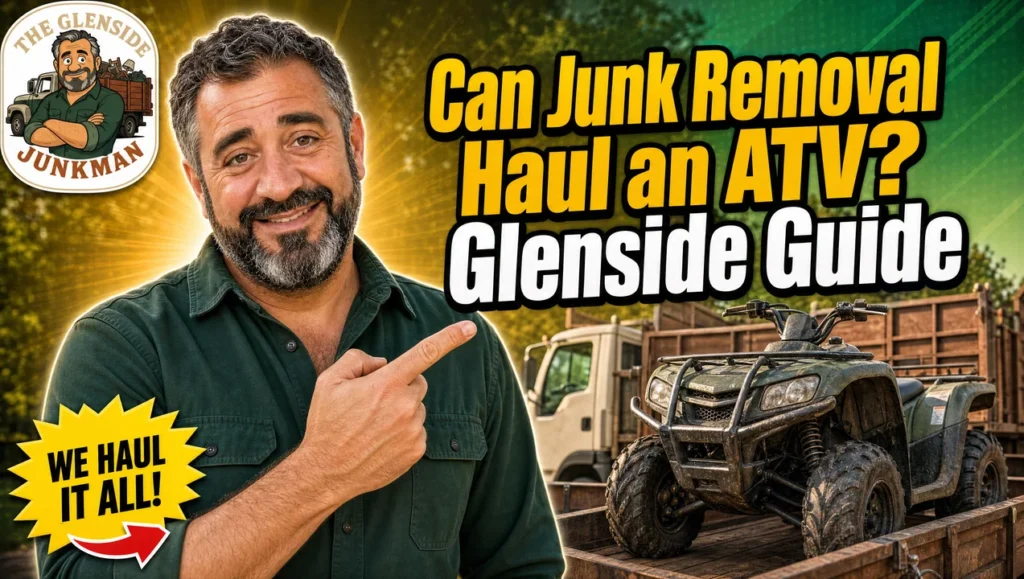
Yes, many junk removal services can haul an ATV or similar off-road vehicle — but two things decide whether they’ll take your job: whether they accept that item type, and whether your address falls inside their service area. A recent caller asked exactly this, searching online for Junk Removal Glenside, then asking “ATV junk that I could take” and “where are you guys located?” — and the call ended right there. This article answers both questions so your call doesn’t end the same way.
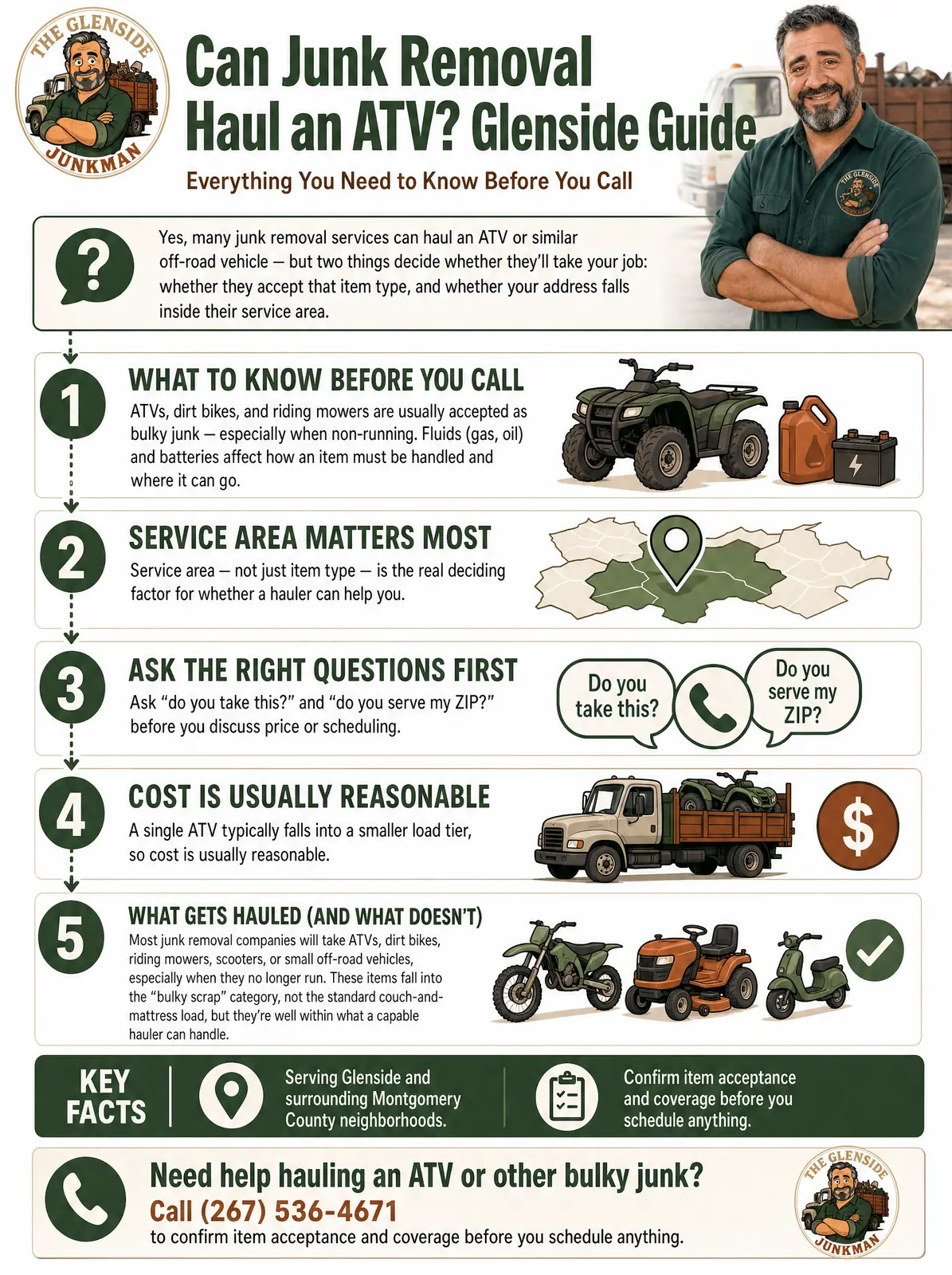
Serving Glenside and surrounding Montgomery County neighborhoods. Call (267) 536-4671 to confirm item acceptance and coverage before you schedule anything.
What to Know Before You Call
- ATVs, dirt bikes, and riding mowers are usually accepted as bulky junk — especially when non-running.
- Fluids (gas, oil) and batteries affect how an item must be handled and where it can go.
- Service area — not just item type — is the real deciding factor for whether a hauler can help you.
- Ask “do you take this?” and “do you serve my ZIP?” before you discuss price or scheduling.
- A single ATV typically falls into a smaller load tier, so cost is usually reasonable.
Do Junk Removal Companies Take ATVs and Similar Vehicles?
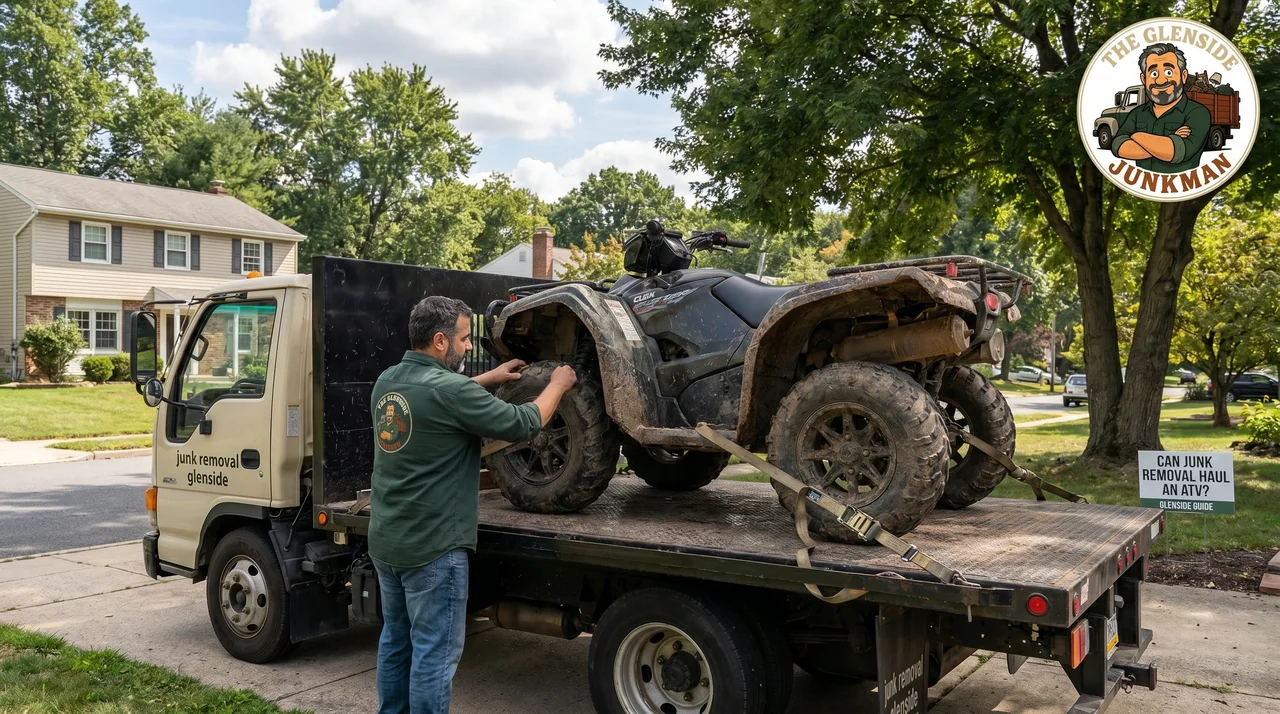
The short answer is yes — most local junk removal services will take an ATV, dirt bike, riding mower, scooter, or small off-road vehicle, especially when it no longer runs. These items fall into the “bulky scrap” category, not the standard couch-and-mattress load, but they’re well within what a capable hauler handles.
The key word is “usually.” Not every company has the equipment or disposal route for a 600-pound quad. Always confirm before you assume.
Items That Are Typically Fine vs. Items That Get Refused
| Usually Accepted | Requires Special Handling or Gets Refused |
|---|---|
| ATVs and dirt bikes (non-running) | Full-size cars or trucks (title issues) |
| Riding mowers and lawn tractors | Vehicles with active hazardous fluid leaks |
| Scooters and small trailers | Items classified as hazmat (chemicals, asbestos) |
| Scrap metal and outdoor equipment | Medical waste or biohazard materials |
| Jet skis and small watercraft | Anything requiring a vehicle title transfer |
Why the Condition of Your ATV Matters
Gas, oil, and batteries change how an item gets disposed of and where it can go. A hauler routing your ATV to a scrap yard or recycling facility may need fluids drained first — landfills and scrap processors have their own rules about accepting fuel-bearing equipment.
Practical steps before pickup: drain the gas tank if you can, note whether there’s a battery that can be removed separately, and let the hauler know the condition upfront. That one conversation prevents surprises on the day of pickup.
The Question That Decides Everything: Are You in the Service Area?
Here’s what actually ended that caller’s call. It wasn’t the item — it was the location. The hauler confirmed what they take, but the moment “where are you guys located?” came up, the answer didn’t fit. Call over.
Even when a company accepts your specific item, coverage area is the real gate. A junk removal crew can only drive so far before the job stops making sense economically — and residential service areas are tighter than people assume.
How Junk Haulers Define Their Service Area
Local junk removal is a service-area business. Coverage is typically defined by ZIP codes or a driving radius from a base town — in this case, Glenside and the surrounding Montgomery County area. Being one or two towns outside that radius can put you outside coverage entirely, or it may add a travel fee that changes the math.
Don’t assume that because a company ranks in a Google search for your area, they actually drive to your street. Ask your ZIP code first.
What to Ask on the First Call — in the Right Order
- “Do you take [my specific item]?” — Confirm item acceptance before anything else. ATVs are not standard; don’t assume.
- “Do you serve [my town or ZIP code]?” — Give your exact ZIP. This is the gate question the caller above skipped past too quickly.
- “What’s the price for this load?” — Only ask this after the first two are confirmed. Price is irrelevant if they don’t take the item or don’t serve your street.
- “What’s the earliest available slot?” — Scheduling is the last step, not the first.
That order prevents exactly the dead-end that ended the call this article is based on.
How to Get an ATV Ready for Pickup
A little prep on your end makes the pickup faster and can prevent the crew from flagging the item on arrival.
- Move the ATV to an accessible spot — driveway edge or garage entrance works best.
- Drain or siphon remaining fuel from the tank if you’re able to.
- Remove the battery if it’s loose or easily detached — it often goes to a separate recycling stream.
- Clear a path wide enough for two people to maneuver around the vehicle.
- Note the approximate weight if you know it — helps the crew plan the lift.
What This Type of Job Usually Costs
Junk removal pricing is almost always volume-based — how much of the truck your load fills — rather than a per-item rate. A single ATV, depending on its size, typically falls into a smaller load tier rather than a full-truck charge.
Where pricing can shift: if the vehicle is unusually heavy, requires extra crew members, or needs fluid handling before transport, a hauler may note that as a special-handling item. The right move is to ask upfront, the same way you’d confirm the item is accepted. [Verify exact pricing tiers with Glenside Elite Junk Removal directly.]
For comparison, standard bulky items like a refrigerator or washing machine are handled through a similar process — appliance removal follows the same volume-based model, which gives you a useful benchmark for a same-sized load.
How the Pickup Process Actually Works
Once you’ve confirmed item acceptance and service area — the two steps above — the rest of the process is straightforward:
- Confirm the item type and prep steps with the hauler over the phone.
- Get the price for your load size.
- Schedule a pickup window that works for you.
- Have the item accessible when the crew arrives — driveway or garage edge.
- Crew loads and hauls. You’re done.
The entire sequence takes minutes when the first two questions are already answered. It collapses when they aren’t — which is exactly what happened in the call that prompted this article.
Glenside-area residents can confirm coverage and item acceptance by calling Glenside Elite Junk Removal at (267) 536-4671.
Frequently Asked Questions
Will a junk removal company take an ATV that doesn’t run?
A non-running ATV is usually fine — and often easier to deal with, since it’s clearly past its useful life and the hauler routes it directly to scrap or recycling. Just mention that it doesn’t run when you call, and confirm whether fluids need to be drained first.
Do I need to drain the gas and oil before pickup?
It helps, and some haulers require it depending on where the item is being disposed of. Scrap yards and recycling processors have their own rules about fuel-bearing equipment. Ask the hauler what they need — a quick question that prevents a last-minute issue on pickup day.
How do I know if I’m inside the service area?
Give your ZIP code when you call — that’s the fastest confirmation. Coverage is defined by geography, not just the hauler’s willingness to help. One ZIP code difference can put you outside a service area or inside a travel-fee zone. Don’t assume coverage based on a Google search result alone.
Is it cheaper to drop the ATV off myself vs. having it hauled?
DIY scrap-yard drop-off can save money, but it requires a way to transport a heavy, non-running vehicle — which most people don’t have. Factor in trailer rental, fuel, disposal fees at the yard, and your time. Paid pickup trades a flat fee for the convenience of not moving the thing yourself. For most people with a non-running ATV sitting in a garage, the pickup option is worth the price.
What should I ask before booking any junk removal job?
Three questions, in order: Does the company take your specific item? Do they serve your ZIP code or town? What is the price for your load size? Get those three answers before you discuss scheduling. That sequence prevents the dead-end call — and gets your junk gone faster.